

the previous article, we discussed the shift in clinical expectations for 2D C‑arms from “functional” to “user‑friendly”. Many clinicians ask: if all units boast “high resolution” and “high power” on their specification sheets, why do their real‑world handling and imaging performance vary drastically? The answer often lies beyond the datasheet. A truly capable C‑arm does not excel by topping any single performance metric; its core strength rests on the stability of the entire system.
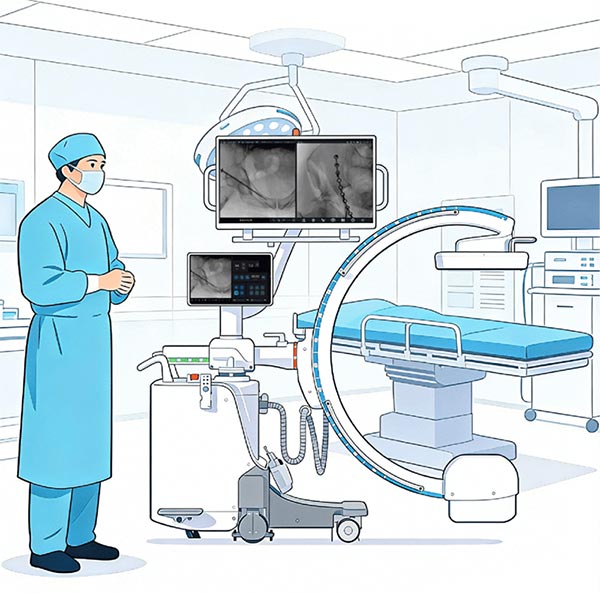
Figure 1 What defines a “user‑friendly” 2D C‑arm?
I. Stability of the Imaging Chain: Clarity Alone Is Not Enough; Reliability Matters
Many devices deliver outstanding results in phantom tests yet underperform amid complex surgical scenarios. While image clarity is fundamental, end‑to‑end imaging stability is the real clinical priority.
- Automatic Exposure Logic: No Flickering Brightness During surgery, variations in patient body thickness and obstruction by metallic implants disrupt image formation. Conventional C‑arms often respond sluggishly, resulting in overexposed or underexposed images. Premium systems feature intelligent Automatic Brightness Stabilization (ABS), paired with per‑shot auto‑optimization technology. Much like an experienced photographer, it adapts to changes in milliseconds. Whether penetrating the lumbar spine in lateral view or suppressing metal artifacts in anteroposterior projection, it maintains consistent image brightness.
- Dynamic Range and Low‑Dose Visibility: Preserving Details in Dark Regions Orthopedic surgery requires clear differentiation between high‑density bone and low‑density soft tissue boundaries. Boosting radiation dose solely to improve image clarity is not a viable solution. Advanced systems employ wide dynamic range tuning and lossless image processing algorithms to retain high contrast at extremely low radiation levels. This protects both patients and clinical staff while keeping critical anatomical structures visible.
-
What You See Is What You Get: End‑to‑End 4K Lossless Transmission
A common weakness in many systems stems from the bucket effect: the flat‑panel detector captures high‑definition signals, yet image processing pipelines and displays degrade image quality. A truly user‑friendly system maintains lossless transmission across the full chain: from flat‑panel detection and image processing to the 32‑inch UHD lossless monitor. Zero signal degradation ensures the view on screen faithfully reflects real anatomical details.
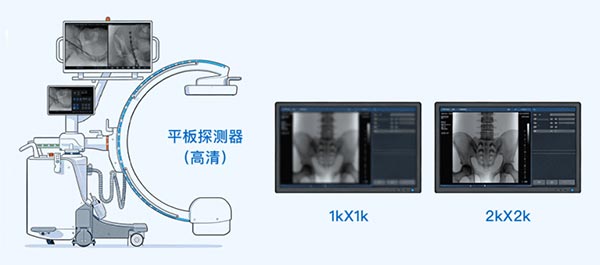
Figure 2 Stability of the imaging chain
II. Smooth Mechanical Performance: An Extension of the Surgeon’s Arm, Not a Burden
Another dimension of “user‑friendliness” is seamless human‑machine integration.
- Consistent Mechanical Movement Why does moving some C‑arms feel like driving a tank, while others glide like a shopping cart? This depends on precise tuning of chassis counterweight, joint damping and motion control algorithms. High‑quality C‑arms deliver smooth start‑stop motion and precise positioning. Minor vibrations will not shift the target anatomy once aligned, turning the mechanical arm into a natural extension of the surgeon’s hand.
- Intuitive User Interaction In time‑critical operating rooms, no clinician wants to navigate convoluted menu mazes. Modern C‑arms tuck complex parameters into the backend. The front end synchronizes output on touch controls and large monitors, supporting multi‑touch for intuitive operation. Surgeons focus on the images rather than cumbersome button controls.
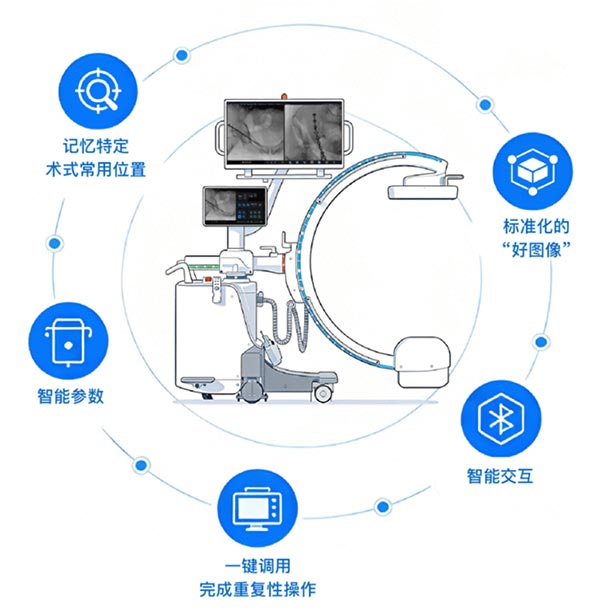
Figure 3 Smooth mechanical operation and intelligent system design
III. System Intelligence: Bridging Gaps in Operator Experience
A good tool raises the baseline performance of its user. Traditional C‑arms rely heavily on technician expertise. In the era of artificial intelligence, new‑generation C‑arms built on systems engineering adopt adaptive intelligent workflows.
Equipped with built‑in application expertise, the system automatically adjusts parameters according to patient conditions, lesion location and anteroposterior/lateral imaging views. It can memorize preset positions and parameters for specific surgical procedures and execute repetitive operations with one click. This helps generate optimal images at the lowest possible radiation dose. Such intelligent intervention reduces performance discrepancies caused by variation among operators, making consistent high‑quality images a routine outcome.
Conclusion
To judge whether a 2D C‑arm is truly user‑friendly, one should not only examine its peak laboratory specifications but also evaluate its overall system performance in the complex operating room environment. From stable output of the imaging chain and precise, consistent mechanical movement, to simplified intelligent interaction — this is far more than a simple stack of technologies. It represents an in‑depth understanding of clinical needs and sophisticated systems engineering.
- prev: University-Enterprise Partnership Embarks on a New Journey2026-10-16
- next: none!